Body Sculpting & Fat Reduction in Dubai
Non-surgical body sculpting at Paramy Poly Clinic is designed for people who want to improve the shape and definition of specific areas without surgery. The treatment may help address localised fat, support muscle definition, and improve the appearance of skin firmness and body contours.
Paramy uses a combination of Radiofrequency (RF) and High-Intensity Focused Electromagnetic (HIFEM) technology, with the treatment approach selected according to the patient's body area, concerns, and goals.
What Is Body Sculpting?
Body sculpting, also called body contouring, refers to aesthetic treatments designed to improve the shape and proportions of specific areas of the body. Depending on the technology used, treatment may target localised fat, stimulate muscles, or support improvements in skin firmness.
Unlike weight loss, body sculpting does not aim to produce a significant reduction in overall body weight. Instead, the focus is on areas where localised fat or limited muscle definition may affect the body's contour.
This can be useful for adults who maintain a healthy lifestyle but still have specific areas that are difficult to change through diet and exercise alone. Common concerns include localised abdominal or waist fat, reduced muscle definition, and mild changes in skin firmness.
The goal of fat reduction through non-surgical body contouring is to refine the appearance of selected areas — not to replace healthy weight management. Results depend on the technology used, the treated area, individual tissue characteristics, and lifestyle factors.

Body Sculpting at Paramy Poly Clinic
At Paramy Poly Clinic, body sculpting is approached as a personalised treatment rather than a one-size-fits-all procedure.
Doctor-Led Assessment
Your treatment starts with an individualised assessment of your body area, concerns, and goals rather than simply applying the same treatment to every patient.
Personalised Treatment Plan
The assessment considers treatment area, localised fat distribution, skin laxity, muscle definition, and your aesthetic goals before any technology is selected.
Technology Selection
Based on the assessment, the appropriate technology — RF, HIFEM, or a combination — is chosen to suit your specific body area and goals.
Realistic Expectations
A doctor-led assessment also helps determine whether non-surgical body sculpting is appropriate for your specific concern, or whether an alternative approach may serve you better.
How Does Body Sculpting Work?

RF Technology for Body Contouring
Radiofrequency (RF) technology delivers controlled electromagnetic energy that produces heat within targeted tissues.
In body contouring, controlled tissue heating may support changes in adipose tissue while also promoting collagen-related remodelling that can contribute to improved skin firmness over time.
RF may therefore be useful when the treatment goal includes a combination of localised contour refinement and skin firmness.

HIFEM Muscle Stimulation
High-Intensity Focused Electromagnetic (HIFEM) technology uses electromagnetic energy to stimulate muscles and produce repeated, intense muscle contractions.
This type of stimulation can increase muscle activation during treatment and may contribute to improvements in muscle tone and visible definition over a treatment course.
Combining RF & HIFEM
RF and HIFEM address different components of body contouring. When appropriate, combining the two technologies can support a treatment plan focused on fat reduction + muscle stimulation + body contouring. The combination is not necessary for every patient — the appropriate approach depends on the treatment area, tissue characteristics, and individual goals.
What Concerns Can Body Sculpting Address?
Stubborn Localised Fat
Some people have small areas of localised fat that remain noticeable despite maintaining a healthy diet and regular physical activity. Body sculpting may be considered for these specific areas when overall weight loss is not the primary goal.
Lack of Muscle Definition
Muscle stimulation with HIFEM may be appropriate for people who want greater definition in selected areas. The effect is intended to complement, rather than replace, regular physical activity.
Mild Skin Laxity
Changes in skin elasticity can affect body contours, particularly after weight changes or with age. RF-based treatments may support skin firmness through controlled heating and collagen remodelling. Suitability depends on the degree of laxity and individual tissue characteristics.
Body Contour Irregularities
Body sculpting can also be used for refinement when a patient is looking for a more balanced or defined contour in a particular area rather than significant weight reduction.
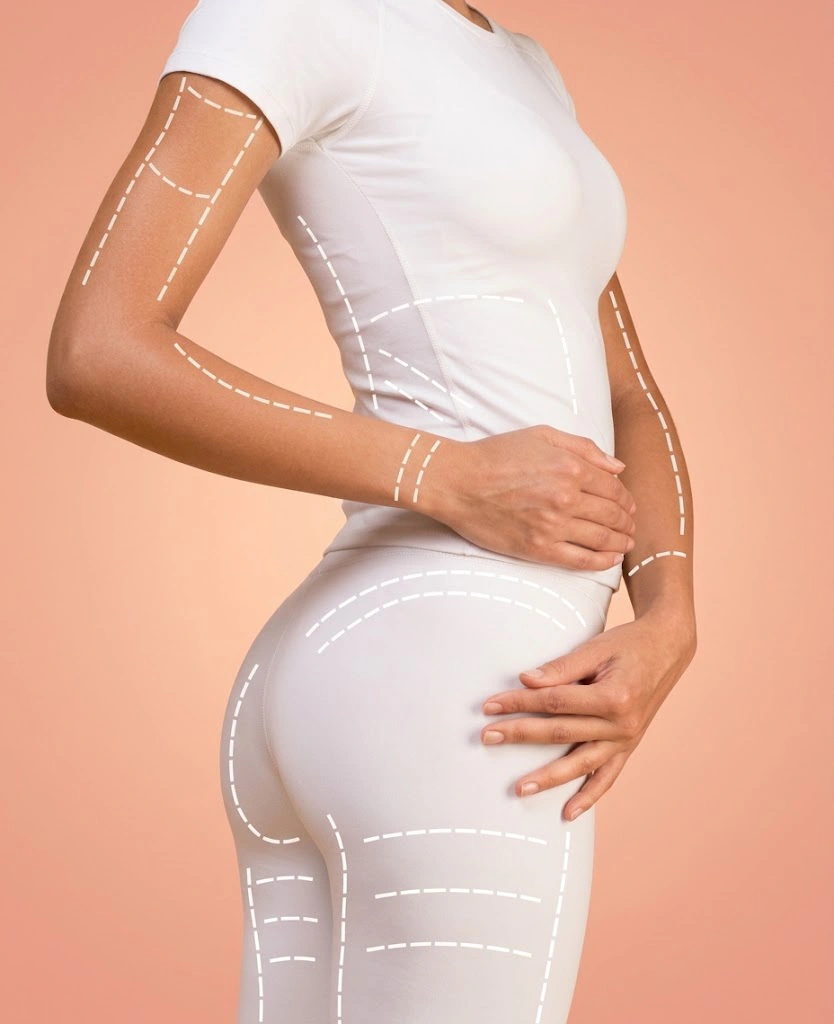
Treatment Areas
Abdomen
The abdomen is a common treatment area for localised fat and contour concerns. Depending on the assessment, RF and HIFEM may be used to address different aspects of abdominal contouring.
Waist & Flanks
Treatment can be considered for localised fat around the waist and flanks when the goal is to refine the overall silhouette.
Arms
For suitable patients, body sculpting may help address localised fat and support improved muscle definition in the upper arms.
Thighs
The inner or outer thighs may be considered when localised contour concerns are present. The appropriate treatment depends on the distribution of fat and the condition of the tissues.
Buttocks
HIFEM muscle stimulation may be used to support muscle activation and definition in the buttocks, while the overall treatment plan can focus on improving body contour.

Body Sculpting vs Weight Loss
| Body Sculpting | Weight Loss |
|---|---|
| Targets selected or localised areas | Reduces overall body weight |
| Focuses on body contour and definition | Focuses on broader weight reduction |
| Does not replace diet and exercise | Usually involves nutrition and physical activity changes |
| Intended for contour refinement | May be appropriate for overweight or obesity management |
Body sculpting is not a treatment for obesity and should not be presented as a substitute for a medically supervised weight-management programme. If significant weight loss is the primary goal, a suitable medical or nutritional weight-management approach should be considered instead.
Who Is a Good Candidate for Body Sculpting?
May Be Suitable For
- Adults relatively close to their desired or stable weight
- People with localised areas of stubborn fat
- Those wanting non-surgical body contouring
- Patients with realistic expectations about results
- People looking to refine body shape rather than achieve significant weight loss
May Not Be Suitable If
- Pregnancy
- Certain implanted electronic devices
- Certain medical conditions
- Significant obesity when the primary goal is weight reduction
- Medical or tissue conditions that could make treatment unsafe
A medical assessment is required to determine whether the treatment is appropriate for you.

What Happens During a Body Sculpting Treatment?
Consultation & Assessment
Your practitioner assesses the treatment area, body composition, skin condition, muscle definition, and your treatment goals.
Treatment Planning
The appropriate technology and treatment area are selected based on your individual assessment. RF, HIFEM, or a combination may be considered where appropriate.
RF / HIFEM Treatment
The selected technology is applied to the targeted area. RF produces controlled tissue heating, while HIFEM produces electromagnetic muscle stimulation.
Post-Treatment Guidance
After treatment, you receive guidance based on the technology used and your individual treatment plan. Because this is a non-surgical approach, significant surgical recovery is not expected.
Is Body Sculpting Painful?
The experience varies depending on the technology, treatment settings, and individual sensitivity. With RF, you may feel a sensation of warmth as tissue is heated. HIFEM produces strong, repetitive muscle contractions that can feel unusual or intense, particularly during the first sessions. Treatment intensity can generally be adjusted to maintain a tolerable experience.
How Many Sessions Do You Need?
There is no single number of sessions appropriate for everyone. The recommended treatment course depends on the treatment area, aesthetic goals, tissue characteristics, technology used, and your response to treatment. Paramy determines the appropriate plan following your assessment rather than applying the same protocol to every patient.
When Will You See Results?
Body sculpting results generally develop progressively rather than appearing immediately. Visible contour changes can take time as the tissues respond to treatment. The timing and extent of results vary between individuals and depend on technology, treatment area, baseline tissue characteristics, and lifestyle factors such as weight stability.
Are Results Permanent?
The longevity of results depends on the technology used and individual factors. Body sculpting does not prevent future weight gain. For longer-term results, maintaining a stable weight and healthy lifestyle is important. Maintenance treatments may be discussed based on patient goals. Results are best described as long-term contour improvements when supported by weight stability and healthy habits.
Body Sculpting Before & After
Before-and-after photographs help illustrate changes in body contour but should always be interpreted in context. Individual results vary.


Individual results vary. Before-and-after images do not guarantee that another patient will achieve the same outcome. Photographs are taken under consistent conditions where possible.
Body Sculpting vs Liposuction
| Body Sculpting | Liposuction |
|---|---|
| Non-surgical | Surgical |
| No surgical incisions | Requires surgical incisions |
| Usually does not require anaesthesia | Anaesthesia is typically required |
| Limited recovery or downtime | Requires a recovery period |
| Non-surgical fat reduction and contouring | Surgically removes fat from selected areas |
| Suitable for localised contour refinement | Can be used for larger-volume surgical fat removal |
These treatments are not interchangeable. Liposuction is a surgical procedure that physically removes fat, while non-surgical body sculpting uses energy-based technologies to influence targeted tissues. A consultation can help determine which approach is appropriate for your goals.

Why Choose Paramy for Body Sculpting in Dubai?
Doctor-Led Assessment
Treatment is tailored to your body area and goals, not a one-size-fits-all protocol.
Personalised Plans
RF, HIFEM, or a combination — selected based on your individual assessment.
Modern Technology
Non-surgical body contouring using clinically established RF and HIFEM platforms.
Realistic Results
Focused on natural-looking contour refinement with transparent expectations.
Frequently Asked Questions
Is body sculpting the same as weight loss?
No. Body sculpting focuses on selected areas of the body and aims to improve contour, localized fat, or muscle definition. It is not designed to produce significant overall weight loss.
Can body sculpting reduce belly fat?
It may help address localized abdominal fat in appropriately selected patients. However, the amount of change varies, and body sculpting should not be considered a treatment for general weight loss.
How many sessions of body sculpting do I need?
The number of sessions depends on your treatment area, goals, tissue characteristics, and the technology used. Your treatment plan is determined following an individual assessment.
Is body sculpting painful?
Most people tolerate the treatment well, but sensations vary. RF may feel warm, while HIFEM creates strong muscle contractions. Treatment intensity can be adjusted where appropriate.
Is there any downtime after body sculpting?
Non-surgical body sculpting generally involves limited downtime compared with surgical procedures. Your practitioner will provide specific guidance based on the technology used.
How long does a body sculpting session take?
Treatment duration varies according to the technology, treatment area, and treatment plan. The expected duration can be discussed during your consultation.
When will I see results?
Results develop progressively and vary from person to person. Your practitioner can provide a more individualised expectation after assessing the treatment area.
Are body sculpting results permanent?
Results can be long-lasting, but they do not prevent future weight gain. Maintaining a stable weight and healthy lifestyle is important for preserving body contour improvements.
Is body sculpting suitable for everyone?
No. Certain medical conditions, pregnancy, some implanted electronic devices, and other safety considerations may make treatment unsuitable. A medical assessment is required before treatment.
Book Your Body Sculpting Consultation in Dubai
If you are bothered by localised fat or want to improve the shape and definition of a specific area, a consultation at Paramy Poly Clinic can help determine whether non-surgical body sculpting is suitable for you.
