
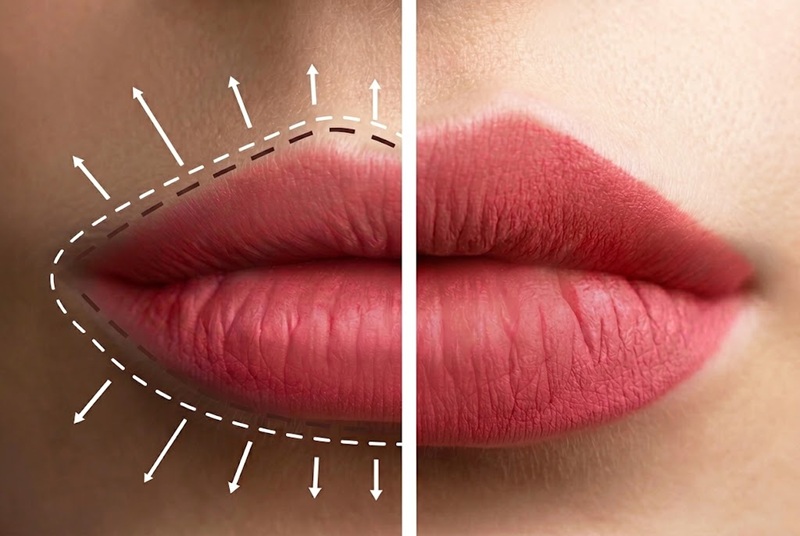
Want fuller lips but unsure whether lip fillers or lip implants are right for you? Both treatments can enhance lip volume, but they differ in longevity, recovery, flexibility, and the way the results can be adjusted.
Lip fillers vs. lip implants is ultimately a choice based on your aesthetic goals, comfort with surgery, desired longevity, and how much flexibility you want. Understanding these differences can help you determine which option may be more suitable for you.
What Are Lip Fillers?

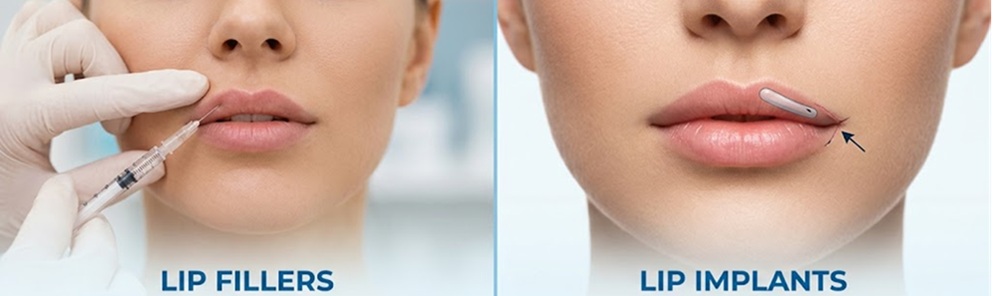
Lip fillers are injectable dermal filler treatments used to enhance the size, shape, contour, and symmetry of the lips. Hyaluronic acid (HA) is one of the most commonly used materials for lip augmentation because it is naturally found in the body and can create a soft, customizable result.
During treatment, a qualified practitioner carefully injects filler into specific areas of the lips. The amount and placement can be adjusted depending on the patient’s goals.
Lip fillers can be used to:
- Add volume to thin lips
- Improve lip definition
- Enhance the shape of the upper or lower lip
- Improve mild asymmetry
- Define the Cupid’s bow
- Reduce the appearance of fine vertical lines around the lips
- Restore volume that has decreased with age
One of the main advantages of lip fillers is their flexibility. A patient can choose a subtle enhancement rather than making a dramatic change in lip size.
For patients who want a non-surgical approach, [Lip Fillers In Dubai] can be an option to discuss with a qualified aesthetic professional.
What Are Lip Implants?

Surgeons use lip implants as a surgical approach to lip augmentation. Unlike injectable fillers, implants involve placing a specially designed implant beneath the lip tissue to create additional volume and projection.
The procedure requires an incision and surgical placement of the implant. Because it is a surgical treatment, recovery is generally more involved than with injectable fillers.
Lip implants may appeal to people who want a long-term approach to lip enhancement and do not want to undergo repeated filler treatments. However, they are not suitable for everyone and require careful evaluation by a qualified medical professional.
Lip Fillers vs. Lip Implants: Key Differences
| Feature | Lip Fillers | Lip Implants |
|---|---|---|
| Treatment type | Injectable | Surgical |
| Main purpose | Volume and contour enhancement | Long-term volume enhancement |
| Anesthesia | Usually topical or local numbing | Local anesthesia, sedation, or anesthesia depending on the procedure |
| Downtime | Usually minimal | Longer recovery |
| Results | Temporary | Long-lasting |
| Adjustability | Highly customizable | Less easily adjusted |
| Maintenance | Repeat treatments may be needed | Usually does not require routine injections |
| Reversibility | HA filler can generally be dissolved by an appropriate medical professional | Removal requires another surgical procedure |
| Surgical incision | No | Yes |
| Best suited for | People wanting flexible, temporary enhancement | People seeking a long-term surgical option |
Lip Fillers vs. Lip Implants: Which Is Safer?
Lip fillers are minimally invasive compared with surgery, but they are not completely risk-free. Common temporary effects can include swelling, redness, tenderness, and bruising. A practitioner can cause serious complications if filler accidentally enters a blood vessel., which is why treatment should only be performed by an appropriately qualified and experienced medical professional.
Lip implants involve surgery and therefore carry risks associated with surgical procedures. These may include infection, bleeding, scarring, asymmetry, changes in sensation, implant displacement, or the need for revision or removal.
The safety of either option depends heavily on appropriate patient selection, the product or implant used, the treatment technique, and the qualifications of the practitioner.
For this reason, patients should avoid choosing a treatment based solely on price or the promise of dramatic results.
Which Option Gives More Natural-Looking Results?
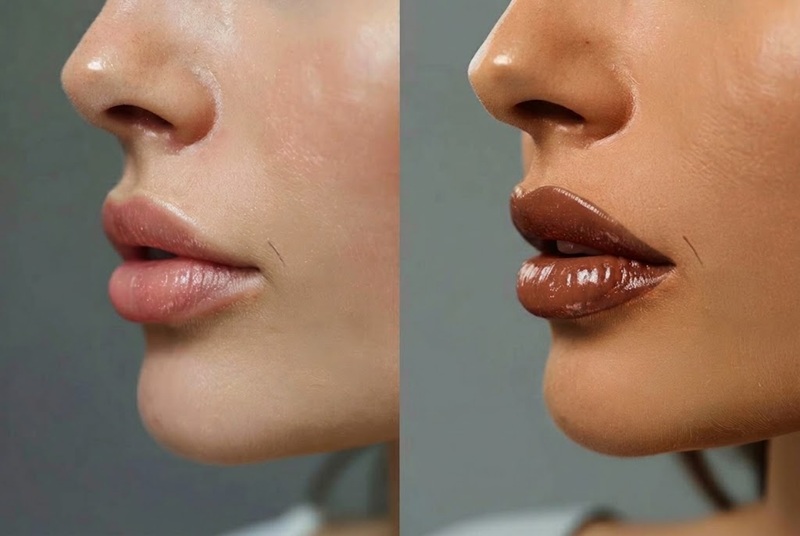
Both treatments can produce natural-looking results when they are appropriately selected and performed.
Lip fillers offer a high degree of control because the practitioner can determine where and how much product is injected. This makes it possible to create subtle improvements rather than simply increasing overall lip size.
Lip implants can also provide attractive results, but the treatment is less flexible once the implant has been placed. The implant’s size and shape must be carefully selected before surgery.
How Long Do Lip Fillers Last Compared With Lip Implants?

Longevity is one of the biggest differences between the two treatments.
Most dermal fillers are temporary because the body gradually breaks down and absorbs the material. Hyaluronic acid fillers commonly provide results for several months, although the exact duration varies depending on the product, treatment area, metabolism, amount used, and individual factors.
If you want to understand how injectable fillers are used for different aesthetic concerns, Dermal Fillers In Dubai can provide additional context about this category of treatment.
Lip implants are designed to provide much longer-lasting results. However, they should not automatically be considered a permanent solution without potential complications. An implant can sometimes require adjustment or removal if problems occur or if the patient’s aesthetic preferences change.
Recovery and Downtime
Recovery is another major factor when comparing lip fillers and implants.
Recovery After Lip Fillers
Most patients can return to many normal activities relatively quickly after lip filler treatment. However, swelling and bruising are common during the first few days.
Your practitioner may recommend avoiding activities that could temporarily increase swelling or irritation.
The final appearance may take some time to settle because early swelling can make the lips look fuller than the eventual result.
Recovery After Lip Implants

Because lip implants require surgery, recovery generally takes longer.
Patients may experience:
- Swelling
- Bruising
- Tenderness
- Temporary changes in sensation
- Difficulty with certain activities during the early recovery period
Who Is a Good Candidate for Lip Fillers?

Lip fillers may be suitable for people who:
Want subtle or moderate enhancement
Prefer a non-surgical procedure
Want adjustable results
Are comfortable with temporary results
Want to improve lip symmetry
Want to define the lip border
Prefer minimal downtime
Lip Fillers vs. Lip Implants: Which Is Better for You?

Lip Fillers May Be Better If You:
- Want a non-surgical approach
- Prefer temporary enhancement
- Want to adjust your lip shape or volume over time
- Prefer minimal downtime
- Are trying lip augmentation for the first time
Lip Implants May Be Worth Considering If You:
- Want longer-term lip augmentation
- Prefer not to have repeated filler treatments
- Are comfortable with surgery
- Accept a longer recovery period
- Want a more consistent form of enhancement
If flexibility and minimal downtime are your priorities, lip fillers may be the better fit. If you want longer-lasting augmentation and are comfortable with surgery and recovery, lip implants may be worth discussing with a qualified surgeon. Your anatomy, aesthetic goals, and medical history should also be considered before making a decision.
Frequently Asked Questions
Are lip fillers better than lip implants?
Not necessarily. Lip fillers are less invasive and more adjustable, while lip implants offer longer-lasting augmentation. The better choice depends on the patient’s goals and preferences.
How long do lip fillers last?
Lip filler results are temporary and can vary depending on the filler used, treatment area, metabolism, and individual response. Many hyaluronic acid fillers last several months before gradually being absorbed.
Are lip implants permanent?
Lip implants are designed as a long-term form of lip augmentation, but they are not necessarily permanent in the sense that they can never require removal, replacement, or revision.
Can lip implants be removed?
Yes. If an implant needs to be removed, the procedure generally requires surgery. Patients should discuss the possibility of removal and revision before choosing an implant.
Can I get lip fillers after having lip implants?
This depends on the individual situation, implant type, anatomy, and medical assessment. Patients should consult their surgeon or qualified aesthetic practitioner before combining treatments.
Conclusion
There is no universally better option when comparing Lip Fillers vs. Lip Implants. Lip fillers may suit people who prioritize flexibility, minimal downtime, and temporary enhancement, while lip implants may be more appropriate for those seeking longer-term augmentation and who are comfortable with surgery. A consultation with a qualified practitioner can help determine which option best matches your goals and anatomy.


